
Sleep: The Research
Sleep hygiene, Stress, Melatonin - Why sleep is so simple in practice, yet complex in nature

Introduction
As I was recovering from a cold, I realised how consistent I had been with sleep this year.
It has quietly been the backbone for how I structure my days.
From young, we treat sleep as an independent variable and therefore overlook it, when in reality it should be something we consciously adjust, a dependent variable, or treat as a constant in our lives, a control variable.
I’ve realised how co-dependent sleep is with our actions throughout the day.
It’s when you hear about the half-life of caffeine, when to put the screens away, and how many hours in advance you should eat before bed.
These all pertain to the phrase ‘sleep hygiene’ - a term used to describe healthy sleep habits and behaviours.
But if we increasingly get research, tips, and advice thrown at us, how much of it can we really grasp?
My projection for this post resides in an assumption; the challenge in nurturing our relationship with sleep is actually our unwillingness to change - instead of treating it like a passenger princess, we chuck it in the boot with the other things we don’t notice near enough.
What do you think?
Is our unwillingness to prioritise sleep just an everlasting rebellion from our inner child who went to bed at 9pm?
In this post, my aim is to consolidate my understanding of sleep while demystifying the complexities behind this simple human need…
The Background
The consistency of when you sleep and wake up is more important than how much sleep you get.
This is something I’ve instilled in the past year and there’s been a major difference in my energy and focus throughout the day.
I only made a change when I started treating sleep as a habit, not an independent variable, and that is how we’re going to start off.
In my research post on habits, I outlined the following formula:
Habit = (cue + routine + reward) repetition
I raise this because it’s much easier to say you want consistent sleep than doing what it takes to make it happen.
When we say consistent sleep we are referring to mostly having recurring sleep times, good quality sleep, and feeling rejuvenated in the morning.
Now back to the formula, my approach for this has been layered.
In order to pull together the fragments of distilled scientific insights and put them to work, I actioned them through the lens of this framework.
First, my cue for sleep is dimming the lights, and this seemingly minor detail could be more important than the conscious decision to sleep.
This is because by reducing our light exposure, it signals the body to wind down and prepare for sleep.
To go a bit deeper, a 2017 scientific report looking at the health consequences of artificial light described light as being essential for synchronising circadian clocks.
Alongside this, light actually affects us on a hormonal level:
“The timing, duration, quality, and spectrum of light exposures… influence the duration, amplitude, and total quantity of melatonin production during the night.”1
This is because from an evolutionary standpoint, our biology hasn’t caught up with our environment and so the brain still interprets late-night artificial light as daytime.
We’ll get onto melatonin in a bit, for now just think of it as the ‘sleepy hormone’ and its antithesis as cortisol, which would be the ‘wakey wakey hormone’.
So far it looks as if the benefit of dimming lights, if accessible, can be easily overlooked.
Now let’s talk about routine.
Something I have implemented personally is eating well in advance of bedtime.
Why?
Not because of a podcast, article, or me having a gun to my head - simply because I felt more comfortable when going to bed and felt recovered in the morning.
Now, this simple commitment has knock-on effects that are written in small print.
We could villainise the opposing side and say when you eat food, you typically watch something on a screen and we can then catapult ourselves into sensory overload, blue light, and increasing heart rate, but let’s hold off for now.
Let’s focus on the small print.
Holistically, your evenings become slower and more structured, meaning you can actually start to have a bedtime routine.
It’s then you talk about dimming lights and other cues to get you primed for sleep because you don’t want to be eating in the dark do you…
The American Time Use Survey found that eating or drinking less than one hour before bed is associated with longer, but worse quality sleep and increased wake after sleep onset (WASO), i.e. the total time awake between going to sleep and fully waking up.
I know that one all too well, and you probably do too…
waking up thinking I’ve had a brilliant sleep - only to see that it is 4am and my alarm was for 7am.
But as of today, that is an issue of the past - thankfully.
The final parts of the habit equation are reward and repetition which I think are self-explanatory.
Great sleep = reward.
Having a consistent schedule then reinforces consistent sleep as a habit.
That is how I fixed my relationship with sleep.
Are you punishing yourself?
Recently, Dr. Aditi Nerurkar, MD, a Harvard physician and best-selling author, reaffirmed a past point she made on the Diary of a CEO podcast, this time in the context of social media use.
My brain started firing as she talked about ‘revenge bedtime procrastination’ - how people delay sleep to reclaim a sense of control or “me time”, even though it backfires on energy, mood, and focus the next day.
Most of the time you delay sleep with your phone, and so it’s a double whammy.
As a person from the UK, I was intrigued to see how this may work in conjunction with British culture.
In 2025, 52% of UK internet users aged 18-54 said that their work life gets in the way of them having a more healthy lifestyle. (Source: Mintel)
When I read that as a person relatively new to the workforce, it intrigued me because overall health is a major factor in our sleep hygiene.
That statistic infers that many people feel as if they are caught in a wave and choose to stay on their surfboard so they can dismount on their own time, which in this case means trading sleep for pleasure.
Zooming out a bit more, and in a culture where difference isn’t encouraged and bonding happens through complaining, it begs the question:
Is it really as easy as changing your cues and routines to introduce healthy habits, or are there other interpersonal factors at play?
To make change in an area that has seen so little feels like unearthing an entrenched pattern with the inertia of a truck.
That reminds me of my post on small wins where I said:
“when willingly operating in a different domain, it is our responsibility when we share our achievements to explain what the gravity of it is.”
In this case, the domain we’re operating in is one of day-to-day life where celebrating wellness distastefully undercuts the culture of complaining and relinquished accountability.
Back to the statistic, the aspirations under that umbrella of what we deem a healthy lifestyle eventually become the priorities we didn’t attend to and therefore ended up losing their importance.
These will be the priorities that become apparent when your health forces you to peer under the rug you’ve been sweeping under for so long.
So to develop this exploration further, I figured that ‘healthy lifestyle’ alludes to one of the most important facets of our overall health - exercise.
We will contrast this underlying principle with topics that describe behaviours that currently underpin our widespread struggle with sleep.
Sleep & Exercise
A 2015 research paper looking at resistance training and sleep found that morning exercise was found to significantly improve the time required to fall asleep as well as the sleep quality, while evening exercise significantly reduces WASO. 2
Furthermore, a paper on exercise and sleep efficiency (Brand et. al, 2014) mirrored those results, finding that exercise an hour and a half before bedtime was associated with increased deep sleep and decreased REM sleep.3
Deep sleep is where the brain clears toxins, which is crucial for feeling rested, whereas REM sleep impacts integration of memories and cognitive capability.
To me, this signals morning exercise as being the best for sleep.
At the start of this post, I began with the assumption that an unwillingness to change is what impacts our sleep the most, and in this case that may apply.
Personally, I prefer workouts earlier in the day as a way to get the body moving and I find that I get a second wind or some morning momentum after having done so.
Therefore, rest actually feels like rest and not anxious suspense…
Blue Light
To the tip of the iceberg now, and you may have heard a bit about ‘blue light’.
It being thrown around left, right, over your head - but why is it talked about so much?
Well blue light is a wavelength of light emitted from the screens of electronic devices and artificial lights, which in turn stimulates parts of the brain that make us feel alert.4
This also elevates our body temperature and heart rate; two things that should fall as you go to sleep.
It doesn’t mean blue light is inherently bad, and the aim isn’t to villainise it, but my takeaway is that how we strategise our exposure to it is in theory a very accessible precaution.
Consequently, it makes for easy recommendations such as no screens an hour before bed, and therefore is a reasonable segway into more elaborate ways of developing better sleep habits.
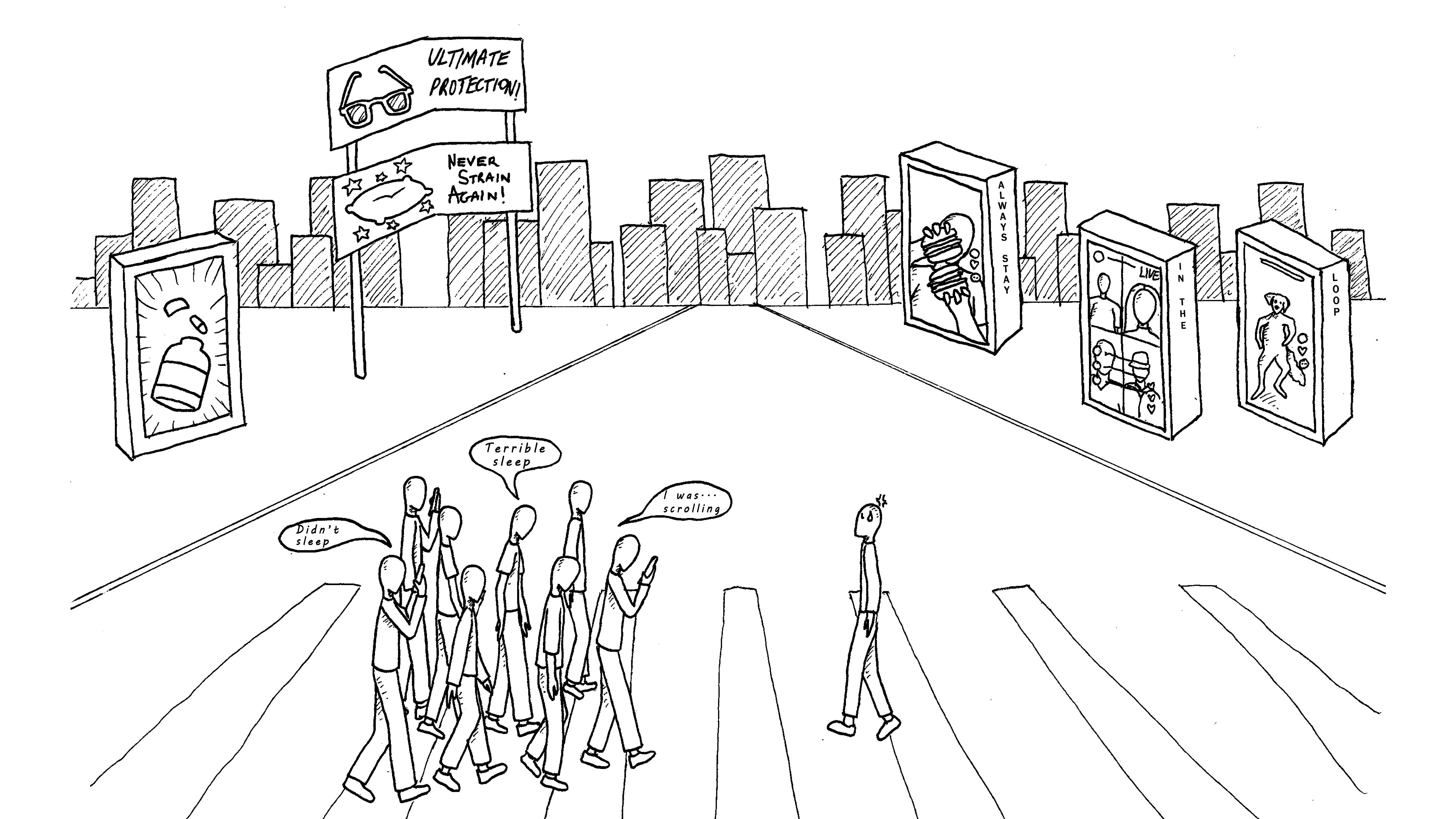
But in reality, it is increasingly difficult to put that phone down, which in itself is a bottleneck for the sleep practices we wish to develop.
Melatonin & Supplementation
It’s from here I want the conversation on melatonin to interject.
Generally, but more so in abstract cases such as sleep, I feel as if many people tend towards more complex solutions before trying the simple ones as a way to appease the internal monologue that says they’re doing something about it, and as they cover their back, they keep a distant proximity from the problem so they can deflect blame if the problem persists.
Strap in, because we’ve got a lot to talk about.
So what is melatonin?
Melatonin is a hormone that promotes sleepiness; rising in the evening, peaking at night, and dropping towards morning.
As a result, its inverse relationship with cortisol is crucial in regulating our sleep-wake cycles.
In practice, taking a melatonin supplement isn’t difficult and is much easier compared to forming a sleep routine.
However, it looks like we are in constant battle with our physiology; trying to net-off against our shortfalls by artificially boosting a hormone we naturally produce.
That is a concern when looking at the market of melatonin:
At present, over $1 billion is spent by US consumers per year on melatonin and this is projected to increase to $3 billion by 2030.5
The lack of info around its long-term effects has brought about studies linking it to heart failure due to its potential role in lowering blood pressure, which is a precautionary consideration.
Therefore, within countries such as the UK, there is real caution around its use.
This is demonstrated by the NHS who show the primary use of melatonin is for treatment of insomnia patients aged 55+ with a treatment duration of “up to 13 weeks.”6
A quick aside, the trend when it comes to general supplementation is that people are seeking convenience.
In the UK, 51% of consumers who put any effort into managing their health take vitamins/supplementation. (Source: Mintel, 2025)
This seems to be on the rise worldwide as we try to realign our hijacked physiology.
The concern doesn’t stop there.
Melatonin supplements seem to be significantly more dangerous in the US market compared to anywhere else due to the lack of regulation surrounding it.
As it is classed as a supplement and not a drug, it doesn’t require FDA approval to reach the shelves and so studies have found that products can include no melatonin or multiples of what is stated on the label - like 667% of what the label says.7
Not only this, but studies have also found harmful contaminants in gummies for children which come as a result of melatonin not being in pure form, such as CBD and serotonin.8
Therefore, as an over-the-counter solution, the real danger is the lack of understanding around melatonin’s use.
When listening to the sleep expert Dr Michael Breus, he highlighted the following:
“Melatonin is a sleep regulator, not a sleep initiator. It doesn’t affect sleep drive, it affects sleep rhythm.”9
What this means is that melatonin regulates the circadian rhythm by putting you in a state of ‘quiet wakefulness’ that helps promote relaxation, instead of making you sleep and knocking you out like a sedative (which is what people want to believe).
In terms of side effects, it is commonly cited that people experience vivid dreams which is associated with overdosing on melatonin, which is shockingly common.
This happens because supplementation leads to longer and more intense REM periods, which ironically can leave you waking up tired and drowsy, on top of the general difficulty that comes with waking, especially after taking melatonin.
Realistically, most people shouldn’t be taking it and there are specific use cases; for example, for the elderly with sleep deficiencies, night shift workers, and those recovering from recurring jet lag.
There is limited conclusion on studies looking at long-term use, but the concerns at present lie in its interaction with drugs and unnecessary children’s use.
More broadly, it seems as if the supplement industry is going to continue growing as we continue to seek more convenient sleep solutions instead of investing time into the accessible precautions that stop the development of a problem before it needs a solution.
Whether it’s your underlying routine, an artificial aid, or your behaviour at the surface, where do you see opportunity to change in your relationship with sleep?
Stress & Sleep
The Achilles heel to our behaviour towards health and wellness resides in our stress management, which alludes to the allure of supplementation.
In moments of elevated stress, we react in different ways; exposure to stress may lead to increased resistance, whereas other times we become sensitized and more vulnerable.
This resonates with the idea that how we interpret the same information can be different, but both can be 100% correct.
I may put myself under physical stress as a way to relieve myself mentally, and other times I may do nothing - both approaches are viable.
In the context of sleep, this is really important because we tend to lean into what our reality reflects back at us in order make assumptions that bring closure and therefore comfort.
In other words, as you read this, you may be tethered to your usual ways and have accepted your assumptions as it being the way it is - relinquishing your agency and hoping things will make sense with little oversight.
So in this section, I’ll centre the conversation around my past research on stress and contextualise it through sleep.
Recap on Stress
Selye’s 3-stage theory called the General Adaption Syndrome details how the body tries to adapt to a stressor.
Stress hormones are released to make energy stores available for the body’s immediate use, which is where the ‘fight or flight’ response takes place.
The energy diverts away from the basic bodily functions as it works its way to our skeletal muscles and brain.
If the reaction persists, your body adapts to the situation in an attempt to return to equilibrium, then you experience exhaustion when the body’s resources are depleted and the stress remains.
Over a prolonged period of time, we call this chronic stress and this weakens our immune system.
This shows that our adaptive response is only suitable for the short-term and primes us for survival while being an unsustainable way to cope with stress.
The resultant wear and tear inhibits our ability to respond to stress effectively.
The body’s hyper-vigilance degrades our ability to have deep sleep, and as a result insomnia can be a by-product as we are hyperaroused throughout the day.
This suggests that stress management may be the backbone for this whole exploration, as our ability to withstand voluntary hardship is dependent on the mental and physical resilience we possess.
Voluntary hardship is prioritising a bedtime routine and superseding your desire for short-term pleasure.
Voluntary hardship is in making that change and being in that transition period where you don’t know whether you’re doing it right.
I think you get the point.
If we feel as if we don’t have the capabilities to endure a gradual change, we won’t do it.
Breathwork & Heart Rate
To take a high-level view, one point I wasn’t surprised to hear from Dr. Breus was on meditation and breathwork.
Something I found particularly interesting was that we need a heart rate below 60 bpm to go to sleep.
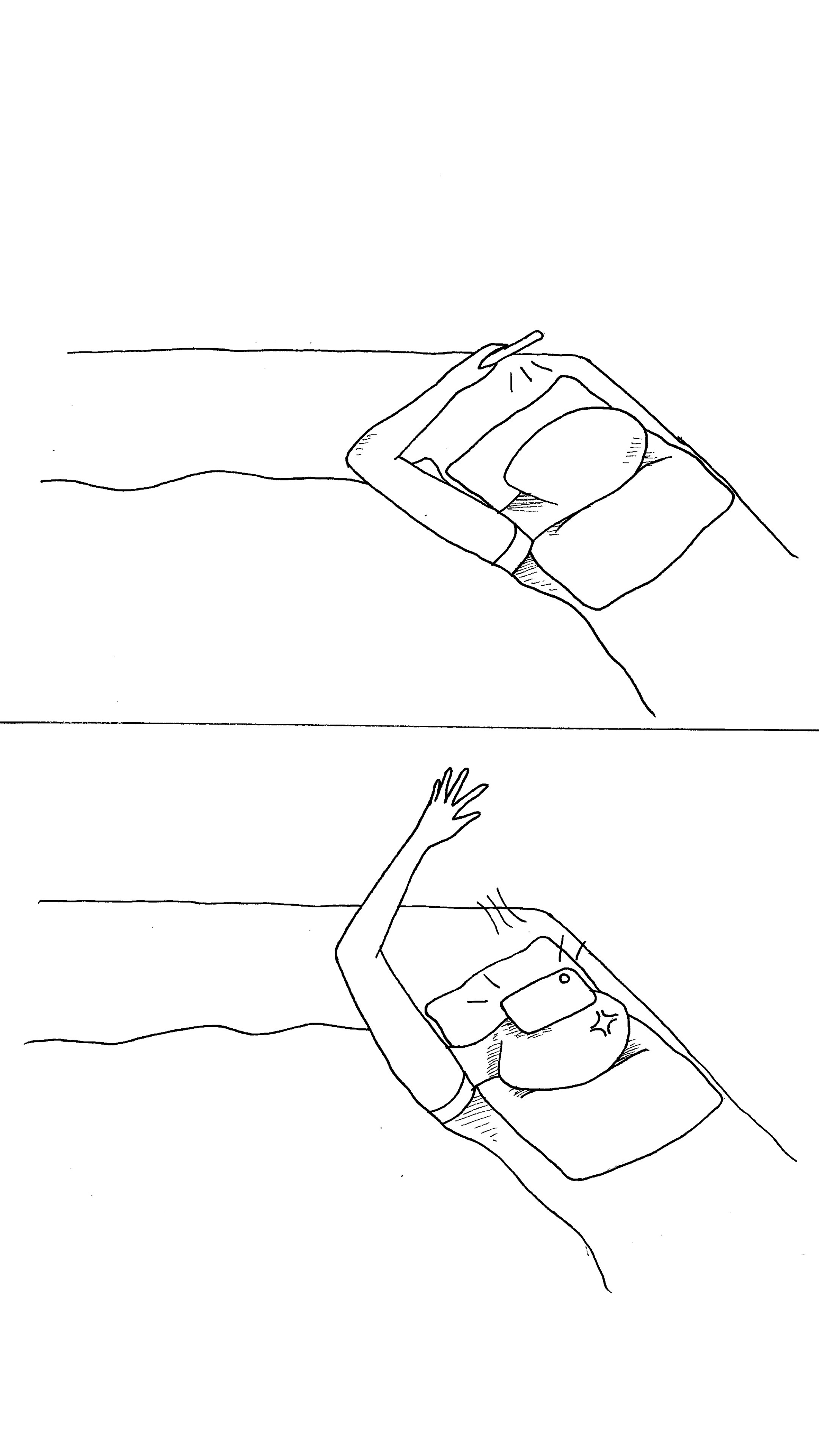
So if you’re tossing and turning as you ruminate on what you didn’t do that day, you have to snap yourself out of it, otherwise you’re not sleeping anytime soon.
My most popular post to date is on a racing mind where I discuss my method of breathwork, so check that out at the end of the post to learn more.
Throughout doing research for this post, I’ve noticed how heart rate sneaks into many areas, whether it is increasing due to digestion and insulin release or just being on our phone, we can unconsciously sabotage our sleep.
Overall, these lead to stressors which have a Bugs Bunny-esque fighting spiral that happens in our head as we wonder why we can’t sleep.
The spiral is difficult to snap out of, but remember you can’t control your first thought; you control every one after that.
Stress can easily become self-reinforcing if you let it, which impacts your ability to navigate it in future.
Self-awareness is the first step of change, and so if this resonates, give yourself a bit of grace and experiment with breathwork or other conscious choices to make sleep come easier to you at the right time.
Your body will thank you.
Reflections
Something that I internally battled with for a long time is the fact that 5 hours of strong sleep actually beats 7 hours of low-quality sleep.
It was a battle because the meaning of sleep quality was ambiguous and too complex for me to bother.
As a result, poor sleep habits became the baseline and then the norm.
Maybe I was comfortable in avoiding that navigation period of finding my feet with sleep because there was a mental reassurance that came with sleeping longer.
Irrespective of this, I can’t blame myself for not knowing what I didn’t know, and as this post has shown, there are a multitude of underlying factors that influence our sleep.
If you’ve made it to the end, I hope you’ve found this informative and not overwhelming, and in spirit of this I think it’ll be helpful to summarise the key takeaways and top tips.
Key Takeaways
Break it down: Having a layered approach to sleep through the lens of habit formation can be an effective guide when exploring what you can do to get better sleep;
You’re not alone: Bedtime procrastination and supplementation is a common experience - remain vigilant in the approach that precedes you falling asleep;
The Puppet Master: Stress management underpins your decisions which determine the relationship you will have with sleep.
Top Tips
Here are five things you can do today:
Have a cooler bedroom to reduce core body temperature which helps you get to sleep and reduces the chances of waking in the middle of the night;
Eat well in advance of a consistent bedtime (ideally 3 hours before);
Exercise in the morning;
Breathwork as a way of reducing heart rate;
Leave your phone out of sight; if possible out of your bedroom
One final thing.
I purposely chose to not go on the path of contextualising stress or sleep through diseases because it is a massive rabbit hole that would regurgitate findings way above my pay grade. 😂
It would probably aggravate your inner child also…
and so it just wouldn’t resonate.
There will always be a link between two things we can intuitively correlate, but its weight in our lives is diminished due to the sheer number of links that can be made.
Remember that without a strong grasp of the signal, which is the basic and core ideas, the more complex stuff becomes no more than noise.
Therefore, this post should empower you to take a step forward with sleep and perhaps confront that thing you know has been holding you back.
On that note, if you would like to go deeper into the topics discussed, you can find the sources at the bottom of this post.
Feel free to share your thoughts in the comments.
Footnotes
The Diary Of A CEO (2026). Sleep Doctor: If You Wake Up At 3AM, DO NOT Do This! [online] YouTube. Available at:
[Accessed 1 Mar. 2026].
Other Sources
Unlearning the Invisible Rules of Stress: Does it make or break you? - The Thought Base
Taming the Internal Chaos: Calming a Racing Mind in Busy World - The Thought Base
Interrelationship between Sleep and Exercise: a Systematic Review - Dolezal, B.A. et al., (2017)
Light exposure behaviors predict mood, memory and sleep quality - Nature
The State of Sleep Aid Dependency in America (2026) - Healthy Americans
I’m a Nutritionist. Here’s the Truth About the Latest Melatonin Safety Scare - Good Housekeeping