
The Subtle Value of Lateral Thinking
How small shifts in direction can unlock real progress

Introduction
“You cannot look in a new direction by looking harder in the same direction.” - Edward De Bono
The word ‘creative’ connotes artsy, and that directs a lot of people into saying they aren’t creative.
However, to problem-solve is to think creatively; think outside of the box, to which the late pioneer in creative thinking, Edward De Bono, inspired this post.
AI is a cascading wave that makes thinking creatively more pertinent than ever.
Every week it seems as if someone from the tech industry is doing a podcast on it or there’s a news source engaging in some scaremongering.
From my perspective, we are powerless in the sense that AI will be integrated across different facets of our lives, which arguably isn’t the inherently bad thing.
It’s more so the creators and distributors of AI and their values that is amplifying the fear around what exactly a world with AI would look like based on where we are now.
To circle back to the quote, the current noise will only have a profound effect on us as individuals if we remain stagnant - practically and in our mentality.
It is in our best interests to be as sharp as possible when things change.
Irrespective of the external changes, how can you position yourself to thrive while staying true to who you are?
This post will explore how thinking creatively will not only prepare you for the future, but also enable you to progress personally and professionally via better capacity for critical-thinking and problem-solving.
The Infusing of Knowledge
Writing is a candle that evolves as long as it’s lit.
It’s light illuminates the shadows of other domains, giving me a chance of navigating my way through them with little information or context.
I’m then able to follow through with my assumptions and identify parallels once they’re corrected.
This analogy alludes to the conversation I had on discipline where I mentioned that:
Some commitments are vehicles for discipline in other areas of our lives whereas other things have a direct impact.
In the context of lateral thinking, this becomes the discipline to not only exhaust generic vertical thinking strategies, but to also look sideways, which is to view a situation from our unique perspective.
I have found this to be a much more effective way of learning than just waiting for the answers after testing the vertical strategies.
You may know the saying of taking one step back to move two steps forward, but in this case we’re not even doing that.
However, the conscious fear of stagnation makes moving sideways somewhat more difficult - almost as if we’re breaking the rules of logic.
We grow anxious and just want to move, even if that makes things worse.
Writing thrives on building that comfortability within uncertainty.
In a way it is a practice of moving sideways; where the progress made from sitting with yourself and looking into the past is a challenge to the definition of progress we’ve been conditioned to accept.
Articulation, confidence, and the lessened friction from thoughts to words are some of the areas that I’ve improved in since I began writing.
They all have abstract price tags, which can obstruct the value of taking time to find ways of developing them.
The impact will be seen in moments where you’re just about finding your footing, which applies perfectly to the start of my work life.
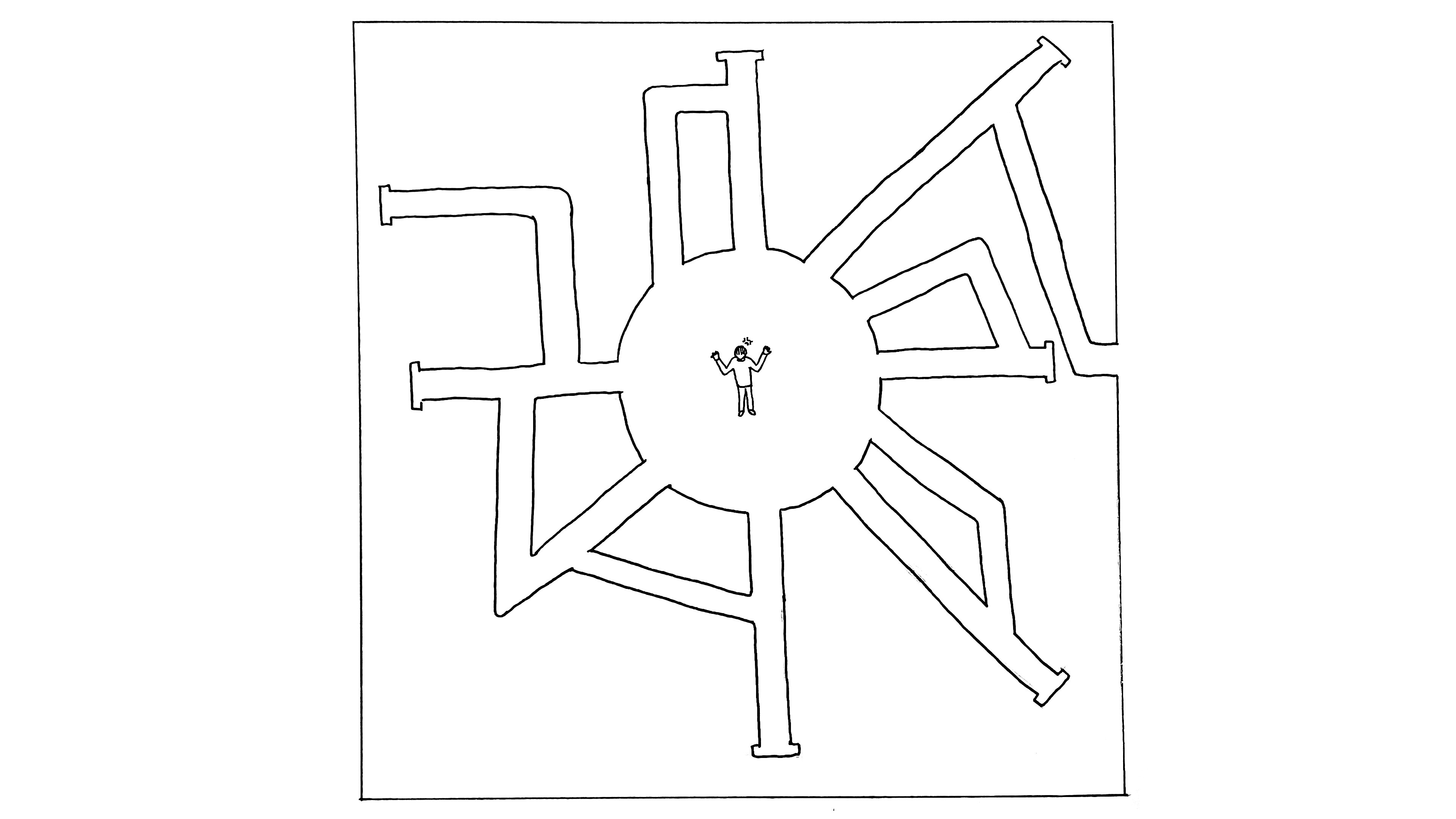
De Bono highlights the role of analogies in lateral thinking, them being provocative in reorganising a person’s perception.
This isn’t about finding direct comparisons, but stimulating thought and provoking new patterns of thinking.
When put in a fast-paced environment where you’re continuously learning, analogies are a way to stop that brain going into overdrive.
You create distance from a problem and apply thinking from a different scenario to the present situation.
Your assumptions now bridge the gap between that initial prediction and the end goal.
Not only is this effective in the moment, but it is fundamental in forming deeper associations within that subject.
In my development so far, I have found that explanations that I start with ‘Imagine’ tend to stick more while confirming or disproving earlier assumptions.
When I ask for confirmation on my understanding, it doesn’t feel like a retreat or an unwinding of the explanation I’ve received, it’s more so taking up the open space that has been provided to me.
On my part, to recognise which of my questions have been answered or whether new ones have arisen takes a critical mindset, one that is developed when your thoughts have their own little battle each time you’re faced with new information.
It’s probably one of the few contexts where infighting would be regarded as beneficial, and that is the practice behind each post I write.
I have to find my blind spots, challenge what I treat as knowledge and connect the dots by remaining curious.
But to even identify how writing has influenced my thinking patterns takes a lot of thought.
When I started, I couldn’t anticipate how it would make me sharper - I just wanted to stay consistent with my self-development and share it.
It’s intriguing how the practice of writing quietly compounds and disseminates into other areas of my life…
Same Room, Different Door
The first platform I started posting on with a clear intention was Substack.
For me, this was a value-driven way of channelling my passion for self-improvement, where the marketing for it came in the form of Instagram carousels and stories.
That was my entry point into producing what we call ‘content’.
It’s funny because my initial thought when it came to content creation was to create a theme page around self-improvement/motivation.
The theme page would’ve consisted of quotes and short videos without my face.
A lower effort, higher volume, but much more shallow entry point that wouldn’t have honoured my gifts at all.
And it’s those characteristics that makes that avenue replaceable by AI; something that wasn’t apparent just two years ago.
Now that I think about it, I probably would’ve also struggled to branch out into different avenues of content, as that would’ve set the precedent as to how I go about making it.
Instead, I saw Substack as the place where I can share ideas at length - the only caveat was that nobody my age knew about the platform.
It was good in the sense that I was and still am building my voice through posts, but tough in the sense that the dreaded void of my efforts would be a longer chapter in my journey of writing.
Lo and behold, here I am two years later writing to hundreds of people, including those that have acclimatised from the typical social media platforms.
But as with anything we aim to grow in, doing so in a solely vertical manner only caps the heights at which you can develop…
so I entered content creation through a different door and ended up making videos with my face in it.
Full circle eh?
De Bono’s book on lateral thinking states:
“The choice of entry point can often determine the direction and effectiveness of the thinking process.”
I was tempted to say that I’ve simply leveraged my writing to start my journey on video, but that’s too vertical isn’t it.
So, I’m going to approach it laterally because there’s nothing better than practicing in real time - here it goes.
I am building on my skill of writing by utilising it in a different context; so changing the frame which naturally changes what’s required within it.
Prior to that, my background in writing has given a refined angle to my idea of content creation as a whole.
I think that’s a better breakdown than just leaving it at ‘leveraged’, but it was appropriate in the context to shift the conversation to a different angle.
To follow up on the idea of a refined angle, the persistence on providing value here on Substack is mirrored through the video ideas I produce.
But to take myself out of the situation at present, I wonder how this angle would be different if the frame was formed from low-hanging fruit; to change the frame will become increasingly difficult as time goes on.
So often you would hear about inciting positive change over metrics, but to know how large the impact is, metrics is our default yardstick.
Without that background in writing, I may have been subconsciously tied to that idea of metrics, metrics, metrics, before trusting my intuition in whether I’m making a positive impact or not.
But now I am at a stage where trust in my intuition is at its strongest.
I also know that complacency can create a parapet between my current systems and lateral thinking.
This has meant starting as a beginner in other areas of content repeatedly, whether it’s posting videos for the first time or experimenting with Substack notes.
To start again doesn’t take away from my present commitment; it reinforces the purpose behind it.
The way I’ve entered content creation has provided guiderails for the patterns I notice.
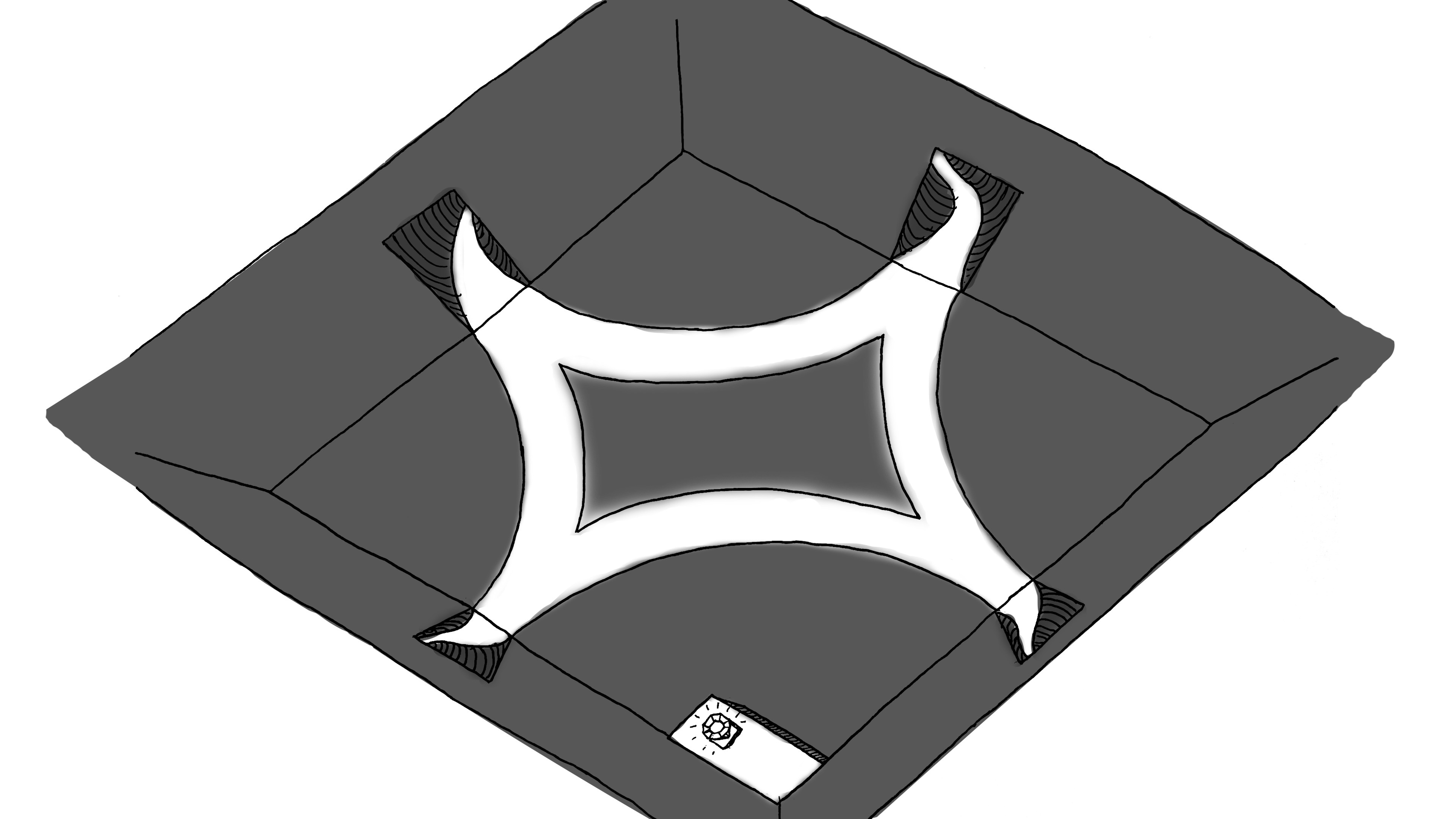
I think the underlying message for this section is to challenge your default thinking patterns.
Even if you think your approach is unorthodox, by breaking your patterns, you are better able to adapt and thrive.
It comes back to my work life.
There are times when I’ve been thinking vertically the whole day, but there comes a problem where the door just won’t open.
Sometimes the solution lies in outlining the situation in a hypothetical way to ask a question.
Other times, after going and coming back to it, it turns out I was just using the wrong key.
In practice you are shifting your attention in areas that seemingly won’t reward it at first.
Even on a personal level, you may find that lateral thinking plays a role in forming your plans.
As opposed to just slotting the commitment in, it may take some work outside of the box to find a unique way.
This demonstrates to me that we are creative in some capacity.
Lateral Thinking in Practice
If you want to develop your lateral thinking directly, riddles are a typical way to practice.
Only that it becomes a slippery slope when you start to hear everything in riddles…
Does that mean you can overdo lateral thinking?
You probably don’t want it as a default setting when approaching even the simplest of tasks.
But in your job, business, or area of study, lateral thinking can be crucial.
You find multiple approaches easier to consider, you can experiment without the fear of taking too much risk, and you will become more self-assured in your overall decision-making.
Lateral thinking essentially forces you to think big picture.
It’s a mental game of deriving explanations from little information, which ultimately dispels your preconceptions.
Back to the point of going sideways, in order to develop lateral thinking, we do have to take a step back - a step into our subconscious processes.
If you’re like me though and riddles isn’t your thing, something that is quite easy to do is to learn about the perspective of someone you won’t usually talk to.
This could be the fan of a rival team, someone in a different industry, or someone from a different demographic.
Your differing views don’t mean you have to clash, but awareness of them clashing from a distance can allow you to become more informed.
There will be something you can agree on.
I’m not saying you have to be an altruist; putting your views to one side and ignoring your own interest, but practice selflessness when it comes to enlightening others.
You’ll find that the scope at which you approach a topic is much broader than if you remained in the cocoon of your own knowledge or lack thereof.
It’s a method that requires patience and maturity, so if you’re curious about people generally, maybe it’s the lateral thinking technique for you.
Another method you can use is to invert the questions you want answers to.
Instead of asking, ‘How do I guarantee success?’ you ask, ‘How do I guarantee failure?’
Personally, these questions always create an expectation of a deep answer, but that’s my default approach to seeking solutions, and I also have to invert that.
So when thinking of basic principles for the opposing side, I am able to reframe my answer on the right side and go deeper within it.
The same idea applies for experiments.
How would you approach something if you had 24 hours to do it as opposed to a month?
This unwinds the cognitive rigidity that repetitive thinking patterns instil and keeps you creatively inspired when encountering problems.
But if you’re not sure of when and how you wish to exercise that subconscious side and you just want a time and a place, improv is always a way to go.
You can make it into a game with someone, record yourself, or find a way that forces you to adapt to randomness.
One exercise I’ve done in the past is having a conversation with someone but having to use a specific word at the start of each sentence.
Aside from sounding like I’m stringing words in a new language, it was eye-opening to say the least.
Everyone sounds silly, but you might sound sillier which is fine - that’s what makes it fun.
The most challenging part is that it’s a conversation, which means you can’t really think ahead.
Instead you’re actively thinking on the spot.
That is lateral thinking in motion.
Ultimately, the purpose of these unnatural exercises is to get familiar with changing the game rather than just optimising within it.
That is second-order thinking; when you start to question the frame, not just the problem.
Conclusion
On the spot, lateral thinking will look inefficient; it means putting those urgent tasks that consistently demand your attention to one side and for a moment, living life at your own pace.
Despite the immediate inefficiencies, one thing that can’t argue with is that your thinking is only as diverse as what you expose yourself to.
If you venture outside of your intellectual identity, whether that’s as a writer, pharmacist, accountant, you’ll borrow ideas from different disciplines which amplifies development within your area.
Knowledge cross-pollinates, and I’ve seen that in how writing has impacted other areas of my life.
Taking that moment to ask ‘Why?’ and explore how something new relates to your existing knowledge can be inconvenient, even uncomfortable.
Aside from the argument that not doing this will lead to a gap in your knowledge, there is a fundamental opportunity to develop the way you think.
The wisdom you seek resides in spaces that most people rush past, and acknowledging that now can save you from the linear trap of being stagnant.
Brilliant. Your point about how 'problem-solve is to think creatively' resonates so much, especially when I think about teaching new generations and the role AI will play. It makes me wonder if, in the future, AI itself could be a tool not just for automating tasks, but for actively nudging us towards more divergent thought procesess, almost like a digital de Bono prompt.
"If you’re like me though and riddles isn’t your thing, something that is quite easy to do is to learn about the perspective of someone you won’t usually talk to."
There's nothing quite like engaging people as a way to open the eyes. Even a good story can open a pov previously unexplored