
The Einstellung Effect
Forget the past. Put yourself at your best.

Introduction
You’ve been doing it the same way for a long time now and it’s baked into your routine.
But have you ever wondered why you never sought a better way of doing things?
Not everything has to be optimised, however your efforts to improve in something have fallen short - so far…
and you just left it and forgot about it?
Nowadays we have a higher propensity to turn to AI as a way of outsourcing part of the problem-solving, but for so long I wondered why I held questions in my head without considering to just search for the answers.
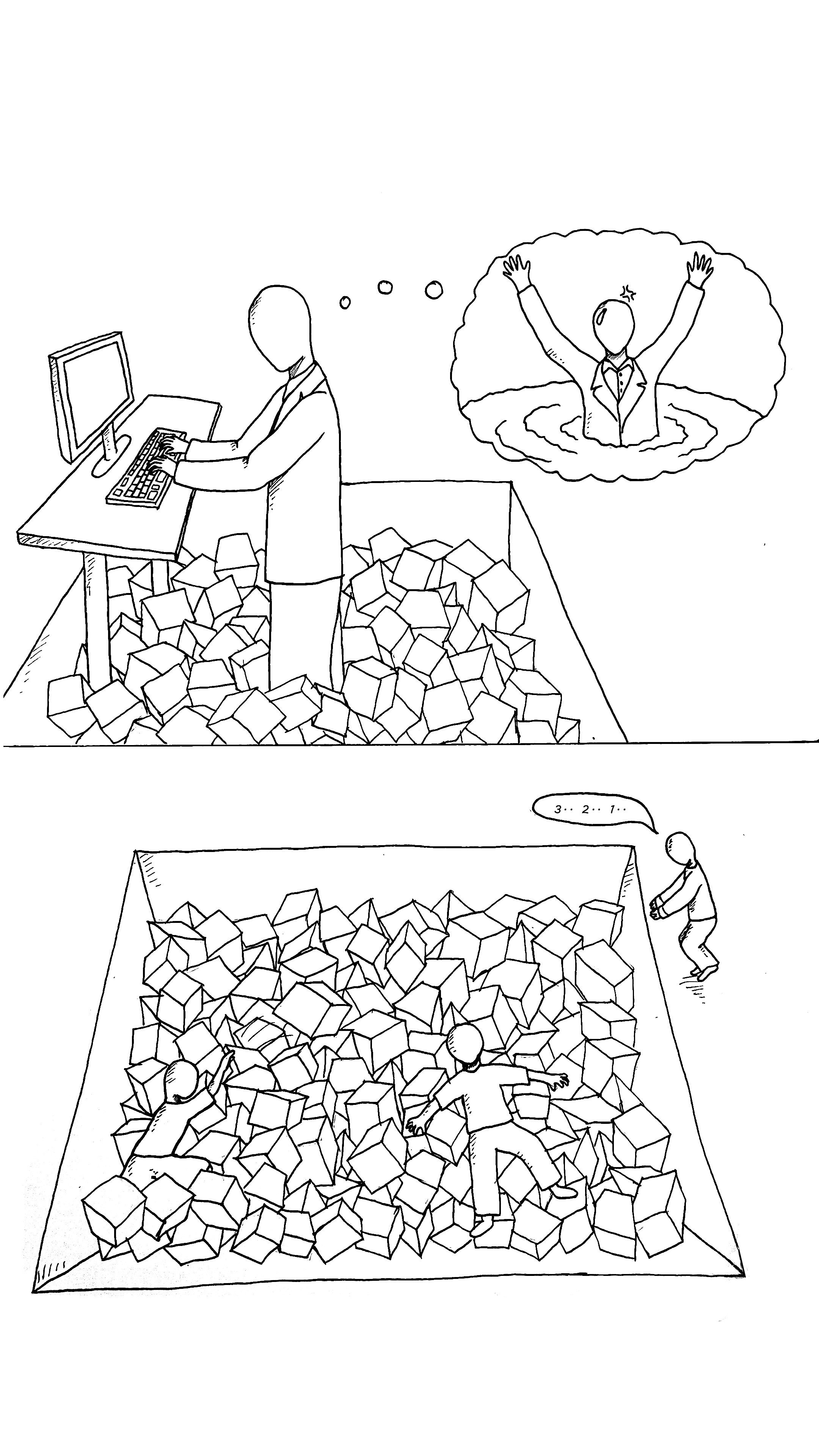
This alludes to the ‘Einstellung Effect’; a cognitive bias where prior strategies prevent us from seeing better or more efficient solutions.
For me, this has looked like incorporating an unwanted problem into my life, normalising it, and consequently making everything a bit more difficult than it needs to be.
Not from a place of laziness though, from a place of being content.
Chris Williamson of Modern Wisdom refers to this as the ‘region-beta paradox’ - where things aren’t going well, but not badly enough to force change.
My previous post on sleep was an example of this, where I reflected and realised how important a consistent sleep schedule has been, not only for its direct impact on energy, but for its second-order impact on how I structure my days.
Sometimes it sounds so simple to the point it seems silly, but that’s a fixed mindset that allows the problems to persist.
Therefore, we will explore the Einstellung Effect in greater detail and as to why it could be the bottleneck stopping you from reaching the next level.
Leveraging the stipulation
Understanding why something is the way it is can give away clues.
Maybe there’s an incentive, less friction between beliefs, or just an accepted way of doing things.
When zooming out, this isn’t only beneficial when creating something of our own, but this knowledge can manifest itself as the guiderails that court the endless possibilities.
I experiment to continuously find new avenues to remain creative and open-minded.
This is seen in my writing, videos, and in the way I study.
Instead of trying to force my creativity into a pre-existing structure or seeing an interesting technique then trying to replicate rather than emulate, I intentionally start with the view of a blank slate.
No hidden rules, no small print, just my imagination.
It allows free exploration; enabling me to find points of efficiency to leverage, instead of reworking my intuition to fit an old way of thinking.
In essence, you are leveraging your accepted norms by questioning them, i.e. the stipulation.
This counters a pitfall we have to consistently pull ourselves out of.
As you become more experienced in practicing a specific area, the stronger the Einstellung Effect can become.
Your norms now become mental templates - a rigidity that progressively turns fragile as time passes.
That’s not your fault.
It’s simply the path of least resistance for your brain.
Hence it is important for us to embrace new ideas that deviate from this structure; like writing a bad draft from the heart.
You know what good writing looks like, but we should still acknowledge the messy writing’s intrinsic value before we start our instinctive process of editing.
To develop that example, let’s look into the second-order/unintended consequence.
This is where the Einstellung Effect can compound writer’s block, as we narrow our approaches to what we have done in the past to then excessively scrutinise the unstructured ideas that deviate from familiar patterns.
Such compounding is indicative of how this effect can be the underbelly of what we call ‘procrastination’ - perhaps your intuition, which has been misaligned, is waving its red flag but you don’t know how to attend to it.
Your heart says go, but your brain says stay.
Overall, it’s intriguing to see the power in simply reworking your approach, but what if you’re trying to undo the Einstellung Effect?
Looking behind the mirror
Einstellung is a German word that translates to “setting” as well as a person’s “attitude”.
The crux of this bias is it being an inertia that tends towards being comfortable in our habits while siding with our resistance to change.
I believe by realising the compound effect of consistently hindering yourself, there will be enough activation energy to make you change.
It’s a matter of self-awareness.
Are you familiar with the mental patterns that dictate how you see the world?
Past this reflection, you can actively unwind this effect by introducing diversity of thought, perspective, and structure.
First let’s talk about thought.
This is your filtering process - what words you choose to acknowledge and why.
One thing we can all relate to is our mental diet; the people you watch, the ideas you’re drawn towards, and so on.
To invert this would be torture and an absolute waste of time, so that’s not the way to go about it.
Instead, it’s exploring on the fringes of your preferences.
You have a preference because you had an inclination to look into something and eventually we curated a set of preferences, which I think we can easily forget.
You know when you feel like there’s nothing to watch?
The algorithm behind the videos makes it easy to forget that we are in control of a self-reinforcing bubble created by the seed we sowed.
Every now and then, you exhaust those options and end up on the search bar.
Other times, you look into the alternatives that have been pushed to you.
When applying this to the real world, the principle is very similar.
You wouldn’t work intently for many years to just give it up one day and do absolutely nothing.
So you follow the designated path ahead, and in turn subconsciously adopt preferences unique to that path.
Then there’s points in people lives where they feel stuck; moving forward with the same path wouldn’t honour their underlying motives.
Dependent on the industry, that could be the perishing of the well-earned harvest you gathered many years ago, to which you failed to plant new seeds or chose to plant them elsewhere.
You then segway into a position that leverages your newfound skills, interests, and potentially your passions.
This journey is imbued by the perspectives we expose ourselves to, as they shape our beliefs.
In essence it’s embracing recurring healthy conflict; which is an oxymoron in literal terms, but constructive in practice.
This looks like debating opposing ideas where each person genuinely believes either side.
This could also look like challenging your preconceived notions from something as simple as your go-to food order to something as complex as therapy.
You counter the Einstellung Effect because you actively reduce reliance on past thought patterns, while potentially uncovering hidden assumptions.
Binding thought and perspective together is structure.
Are you learning new methods in a way that you prefer?
For example, the default approach of searching for an answer may not appeal to you, especially if seeking a complex answer.
Maybe you start exploring through a video which then gives you a sharper angle to search with intention.
But generally, finding alternative ways of learning is a form a lateral thinking, which enables you to problem-solve more effectively.
However, in some cases why would you bother?
If you’re still progressing to your end goal the way you know how to, what is the incentive to explore in a way that might amount to nothing?
Usually, the fear of taking small risks supersedes the fear of wasted time, despite the fact that avoidance could be the ultimate time-waster that leads to regret.
This is where I circle back to the topic of sleep.
For a subject so broad, it’s very easy to get lost in information that’s not relevant to ourselves.
But in an ideal world, you find what you seek, and if you are unable to define what it is you seek, that affects the outcome.
So have you thought about when you explore these new avenues?
Are you attempting to do explorations after a full day’s work or doing it earlier in the day?
As basic as it seems, the timing of when you attend to a task can determine how likely you are to successfully carry it out on a consistent basis.
It determines your resilience.
Low energy makes you prone to the Einstellung Effect because all you want to do is get it done, so you fall back into old patterns.
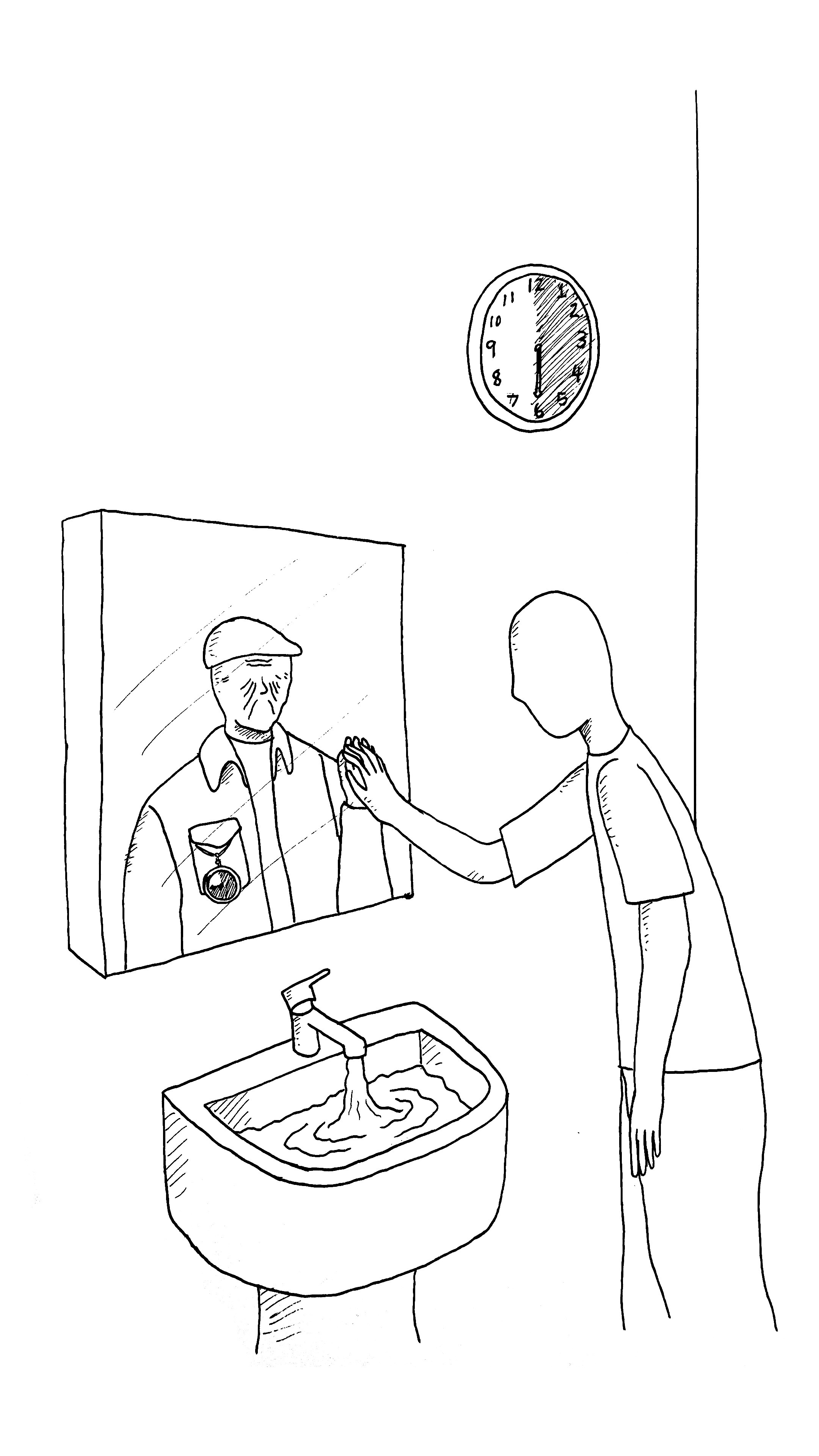
But this is where looking behind the mirror comes in.
What will you see in 5, 10, or 20 years’ time from now if you fail to make that change?
By asking yourself this, you’re essentially front-loading the regret, which doesn’t sound fun but stay with me.
If you take this a step further and invert the question by asking what the present version of yourself will have done for future you to feel such regret, life will be a lot more purposeful and therefore enjoyable.
Personally, this makes the abstract much more real.
It’s no longer you being bogged down by uncertainty, it’s you taking agency for the person you want to become.
From here on in is a reflection I think is interesting to digest.
The retrospective lens is made more powerful by the fact that we have a tendency to look back and romanticise our earlier lives because we create an image theorised on selective memories.
I say this because when we look back and wish we were in times of the past, we bypass the worries that version of ourselves had.
This is what we call nostalgia, which links to an idea from the author Morgan Housel, to which he says the past feels better in hindsight because uncertainty disappears when we look backwards.
You probably won’t remember the worries you had today in 5 years’ time, let alone 12 months from now.
That deeply resonated because when looking into realm of experiences other than our own, we can take away from the present moment, and nostalgia, to me at least, seems to be heavily influenced by young people’s fanatical ideals being retrospectively applied to selected facets of the past.
So in practice we externalise our current desires to give life to them in a world we understand so little about - an outlet sometimes used to bash the present which doesn’t have the benefit of hindsight.
To return to the point, the way we structure our livelihoods can not only make us susceptible to being back-facing instead of front-facing, but also prevent us from seeing the solutions that would make our current coping mechanisms redundant.
AI, Purpose, & The Einstellung Effect
In the world we live in right now, why is this a relevant topic?
I’ve explored how you can avoid the Einstellung Effect alongside how to slowly unravel ourselves from past restraints, but it does also seem like effort - so you need a reason.
Something that came to mind is the growing and pervasive influence of AI and its ability to restructure our way of living.
To me that signals a need for flexibility and adaptability; becoming more generalist rather than specialist.
But to undergo that change, our fundamentals will have to be challenged - by ourselves.
The ease at which we can access AI means that knowledge, software, and systems are becoming increasingly commoditised, whereas in the past, these were exactly the things that served as barriers to entry for so many industries.
To exploit the opportunities and do as much as we can to not be a victim of them, we have to first overcome the Einstellung Effect.
I want to return to this sentence from the introduction:
“Nowadays we have a higher propensity to turn to AI as a way of outsourcing part of the problem-solving, but for so long I wondered why I held questions in my head without considering to just search for the answers.”
It comes back to the wisdom that before you conquer anything, you must conquer yourself.
I’m not saying take over the world, instead I’m inquiring as to what side of the AI restructuring you’ll be on.
The answers you get from ChatGPT are only as good as the prompt, and in a similar vain, the opportunities you find are only as good as the deep inner work that aligns you with them.
Reflecting and reframing the assumptions that served you for so long is more than shifting your outlook; it’s about being your whole self as you grow day-by-day.
This is exactly what I saw when watching a podcast between Alex Hormozi and Tony Robbins - Hormozi sat opposite a man who gave him wisdom, knowledge, and inspiration in many phases of his life, from his first business ventures to meeting his wife.
To me, Hormozi is a serial entrepreneur who has brought his wealth of business knowledge to millions of people.
In this podcast, with humility, he assumed the position of a student being coached on how to connect with his happy side.
After being fuelled for so many years with pain, discipline, grit, and determination, it was another story of the forceful dark energy slowly running out.
To Hormozi, this was the only way he knew; grind and work harder than everyone else.
But in this season of his life, he seeks the same mission but wants to drive it with devotion and fulfilment in the mix.
I witnessed the Einstellung Effect being whittled down in real time as Robbins dismissed the idea that goals have to be something you “suffer for”, instead we are the deciders when it comes to whether we want to suffer.
Pain is unavoidable, but suffering is an option.
Therefore, purpose was reframed from being a push motivator to being a pull one; a type of motivation that draws you towards said mission.
So my question to you is:
What is a motivator that pulls you towards a type of work?
If there’s one thing to note, it’s that you can’t beat a person that’s having fun.
You don’t have to force or fight yourself to change; you simply have to find what makes the change worthwhile to you.
Conclusion
As soon as I saw the words ‘Einstellung Effect’ in my bank of writing ideas, I raised an eyebrow because it was something I heard once and never saw again.
After writing this post I’m grateful I revisited it because there were layers of this onion waiting to be peeled.
To you, the bias may just be a fancy way of explaining the impact of being stuck in your ways, but I think this bias takes the self-awareness up a notch by validating an experience we all have.
How many times have you feared the consequence of deviating from what you know?
Probably every time a piece of advice or perspective gets thrown at you.
How often are you asked:
How many times have you feared the consequence of not deviating from what you know?
It’s a question that wakes you up a bit and asks whether you’re being too comfortable.
Then to zoom in a bit more, ask yourself:
What is the loop that fear prevented you closing?
That is the reflection of you stepping into the shoes of your future self and asking what regrets would stem from not listening to your intuition sooner.
If there’s one thing to takeaway, it’s this:
Your assumptions are fluid. On the surface, they dictate your objective success. Beneath that, assumptions shape the way you experience life - now and in the future. Good or bad, you are the one responsible.