
Are we ever ready for adulthood?
Life is a pursuit of staying young

Introduction
I can’t wait until I grow up, then I’ll be able to do whatever I want!
We thought by 18 we would say ‘Yippee’ and conquer the world, but ironically the rules and restrictions only multiplied as we became more sentient.
In our teenage years we get a glimpse of this - work experience, the grade requirements, and our first taste of ‘we regret to inform you’.
In the midst of this, we see and partially understand future hardship - the trials and tribulations of our parents which we vow to retribute once we’ve ‘made it’.
If zeal and valour paid the bills, we would be able to prepay years in advance, but here we are.
Add fear of failure into the mix and I realise I’m at the mercy of my own aspirations.
The bigger they get, the more uncomfortable the present becomes.
But maybe ‘growing up’ wasn’t meant to be taken literally then.
It’s only a phase we can recognise in retrospect.
Losing our smile
Growing up meant to stop smiling in pictures in order to have an extrinsic appearance of toughness.
It wasn’t said, but it was understood.
Looking back, it was predominantly intrasexual competition all along; a signal that we weren’t to be messed with.
I didn’t buy into having a display of seriousness to mask whatever we feel in the moment, and that resistance would have its impact multiply across my community.
By giving a space to express yourself fully, I was unknowingly unwinding a generational curse of losing our smile.
As teens, little did we know that it would self-reinforce and amplify the loop of trauma that steals our joy.
The everlasting lens of suffering becomes many people’s default state, and so they give themselves the red tape of needing a reason to express joy.
It’s a suffocating mentality; an attack against our own identity.
We need to heal to experience life fully.
Denying ourself of that arduous but necessary process is surrendering to the forces designed to break us.
Keeping our smile is a peaceful resistance to that.
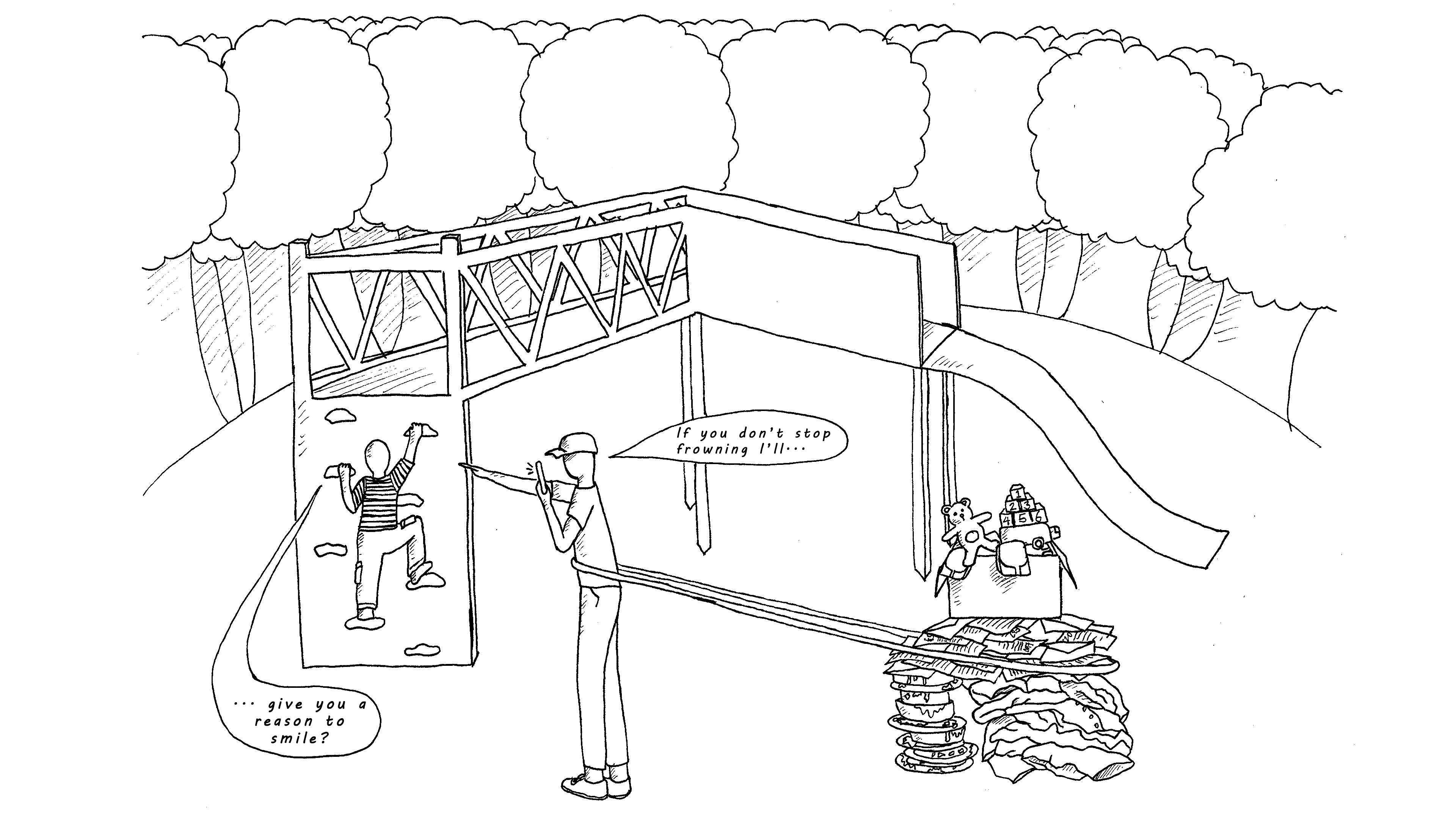
Life is tough as it is.
No matter where you are, you will be reminded in some shape or form.
Social media will push the media that brings you fear, the news is a continuous stream reminding us of the evils of mankind with few glimmers of humanity, and then there’s us.
We have our own surroundings that feel normal.
For me it’s seeing people turn to crime to get by, homelessness in every corner of the city, the impacts of a rising cost of living.
This is urban Gen Z adulthood - in the same city where you’re meant to make your dreams come true.
As we grow up, we naturally uncover the layers of society and realise the deep-rooted issues that lead to the hardship we see on a day-to-day.
With this awareness, I’ve consciously made the effort throughout my teenage life to be more grateful for what I have.
I know there’s millions of people that would give everything to live the life I’m living, so in my opinion to waste it would be selfish.
It’s a deep-rooted push motivator that acts as extra fuel in tough times.
As a young black man, I have awareness of some of the challenges we face navigating this life, and so I was intrigued when learning about why black men lose their smile.
I alluded to this at the start of this section and the tone was very matter-of-fact because I didn’t realise the real ramifications that losing your smile had - until now.
Everything I’ve written up to this point is context; a whistlestop tour of a reality that I and many others have and continue to face, and we’re not done there.
I wondered:
If a black man loses their smile at an early age, how would they bring it back when life only gets tougher?
On the surface you’re singled out, overlooked, and ostracised as your existence is tolerated; a peek into what I’ve witnessed and experienced.
You’re racially profiled to an image that suits prejudice beliefs and dehumanised by way of sexualisation - fuelled with the same underlying hatred that puts our role models on front pages only to scrutinise and bash them.
You’re aware of these injustices from a system built by using our ancestors as slaves and through the commoditization of our strategically destabilised lands.
Desensitisation, detachment, and disassociation become the default way of survival to deal with the weight of this human condition.
I guess the follow-up question is:
How do we ever win?
You acknowledge the circumstances outside the locus of your control are designed to disillusion you, break you down, to package you as an easy-to-control, desperate lost puppy…
but we are still tasked to find the beauty in life.
Despite the trauma, the repressive burdens, and our acceptance of involuntarily being othered, we still find reasons to smile.
Research has shown that people with a negative mindset literally perceive fewer opportunities than those with a positive outlook.
This is because our vision narrows when we’re driven by fear and survival.
When unshackled from this, we are empowered to explore more holistically as opposed to having tunnel vision from the start.
Therefore, black joy in itself is a form of resistance.
It’s selfish to deny your future self of that.
I can still smile when working twice as hard.
I can still smile when spite is thrown at me.
I can still smile when things get tough.
You have limited control over events, but you have full agency over your response.
Closing yourself off from the upside transforms happiness into guilt - another negative fuel source putting you back into tunnel vision.
The same fuel of grit, determination, and discipline that landed you in a place of contentment now becomes toxic and your one-way ticket to burnout.
In short, we shouldn’t feel the need to raise the threshold to feel worthy of happiness.
From experience, the negative fuel only lasts for so long, and so I seek true devotion, passion, and love in the process of becoming a black man.
The Inner Child
As children we had the assumption that what we had then would remain the same, including the same interests, hobbies, and aspirations.
We were none the wiser.
But aside from the obvious flaw, there’s a deeper point there.
We had more agency before they were infiltrated with expectations, norms, and our self-awareness.
You would think that with more information and data, we would adjust and honour our 10-year-old selves in one way or another but we don’t.
The only thing that honours that version is your brain.
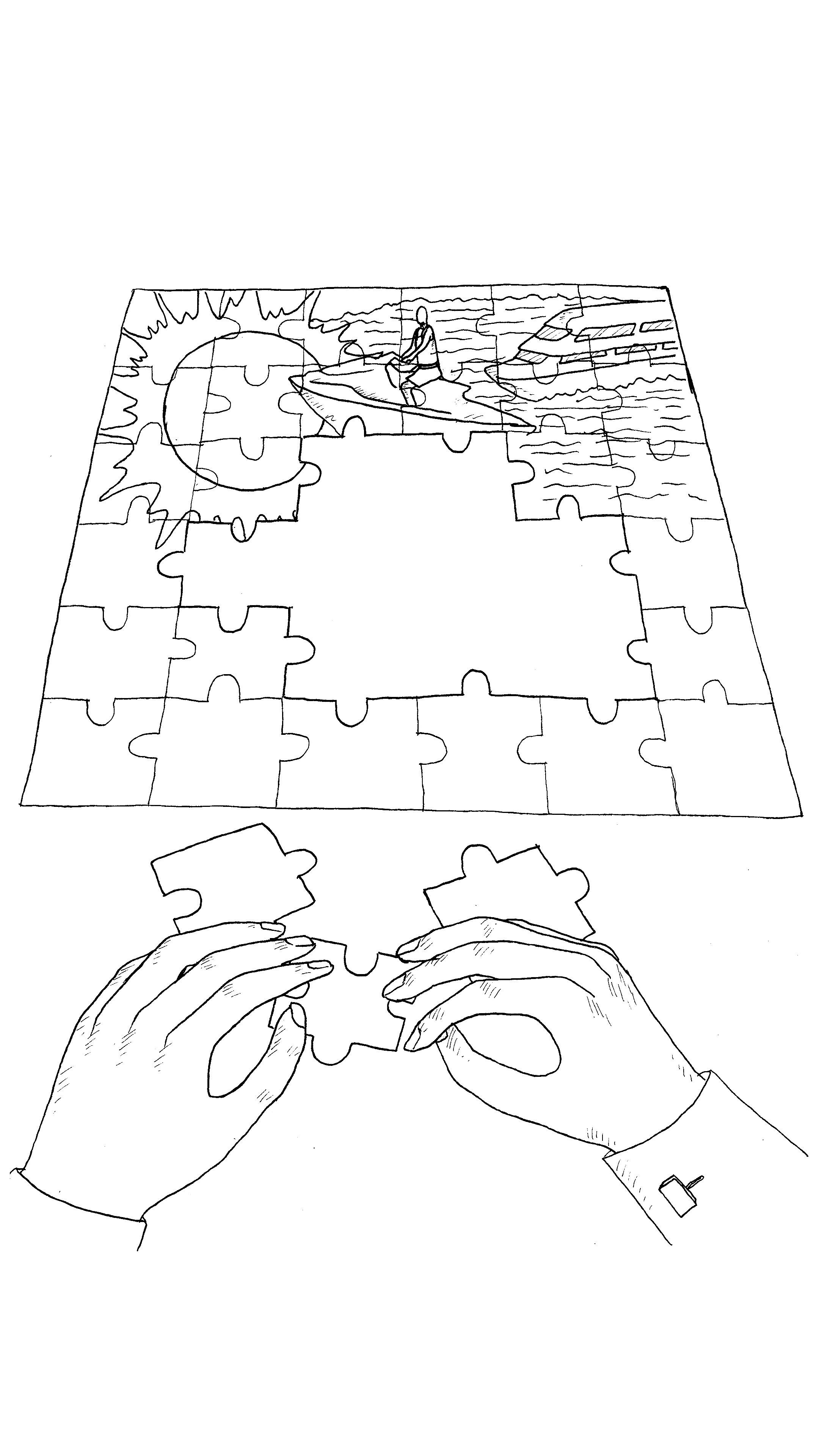
Adulthood sees the close of our childhood chapter, but it is not a new beginning.
As kids our nervous systems were trained to adapt to what ‘normal’ looked like and felt like, and as adults, this is our familiar.
The child that lived in an unpredictable environment may grow up to be hyperanalytical of their environment, potentially leading to anxiety.
If love was absent or you were ignored as a kid, you may gravitate towards people who are emotionally unavailable, and that can obviously lead to a landslide of issues.
We could go on, but the point is that your adult reactions are your childhood adaptations.
The child that navigated its environment is still within you.
Arguably, this is where we can understand the root of what makes us feel aligned.
What did we seek when we were at our peak of being able to think freely?
Nowadays you dare utter the unconventional idea because it doesn’t fit the world you’ve observed - you kill the wonder and replace it with bricks and mortar, i.e. logic.
As adults, we think we can put our childhood experiences to one side out of convenience, not knowing that a lot of our default behaviour stemmed from it.
The invisible rules, your attachment style, and the relationship you have with yourself.
The more in touch you can be with that past version, the better understanding you’ll have.
Honouring what that inner child sought in life will be our greatest success.
The Birthday Paradox
You know it’s coming round every year, but does that diminish its value?
Now you’re working on the day, you can’t be bothered to celebrate it, and if anything it’s a reminder that you’re not getting any younger…
Up until 18, every birthday was savoured and celebrated.
After that, and it becomes dependent on how you’re feeling, because the responsibility is now on you to make something out of it.
There’s no book on that one.
But when you celebrate birthdays, what exactly are you celebrating?
As a child, it was a part of the illusion of ‘growing up’ - the very thing every child looked forward to.
We look back now, and a lot of our childhood is dying embers waiting to be reignited; a blur of the past.
The thing we wanted to fast forward is also the root of nostalgia and core memories.
Maybe the point of the illusion was to keep us going as we became more enlightened year by year.
But now as an adult, what exactly are you celebrating?
More time it’s a checkpoint - surviving another year of adult life.
Somehow we’re meant to find joy in that. 😂
It’s one thing to be grateful, but another to feel joy.
It circles back to my previous post and the point of maintaining curiosity.
As a child it’s ‘I want x for my birthday’ and if you’re lucky, mum or dad perform magic tricks and it appears in your hands on the day.
As an adult, we’ve been given every incentive to lose that wonder, which compounds the difficulty of taking the ownness to accept there are still many things we’re yet to experience.
The best times are when something unexpected happens; either a random event or an unexpected turn in a prearranged experience.
The challenge is reintroducing that into your adult life.
So what will you do to make your next birthday as exciting as it once was?
Conclusion
Within each heavy-hitting topic is an actionable insight.
My takeaway is that we shall allow ourselves to feel and let emotions pass - a common thread throughout this piece.
In writing this, I’ve seen how obscuring our feelings can lead to an imbalance that derails us in our adult life.
Within this is our experience of ‘growing up’, which is simply a euphemism for adulthood.
But if we knew what we know now, we wouldn’t have experienced the childhood that brought about nostalgia, core memories, and shaped us to be the person we are today.
We would’ve instead habituated within our learned helplessness and surrendered to entropy.
Therefore, it is on us to appreciate the hope that served as fuel to get to where we are today, and so the true aim is to maintain a fuel that remains intact with both the dreams and realities.
As with any complex challenge, the only way to not be overwhelmed is to learn along the way.
As for adulthood, we have to move alongside life before feeling ready, so the question is how close we can stay to our true selves while embracing the challenges along the way.
Ultimately, we experience highs when we embrace the unforeseen.
"As we grow up, we naturally uncover the layers of society and realise the deep-rooted issues that lead to the hardship we see on a day-to-day."
I've been living inside this sentence since graduating college and didn't have words for it until right now. Thank you for that.
The question you ask, how do we ever win?, is one I've been sitting with for a while. Something about you asking it out loud made it feel less like a trap and more like a doorway.
What got me most is how different our lives are, and yet the human experience connects us anyway. That feels supernatural to me.
"How close we can stay to our true selves while embracing the challenges along the way."
That feel like the answer to everything.